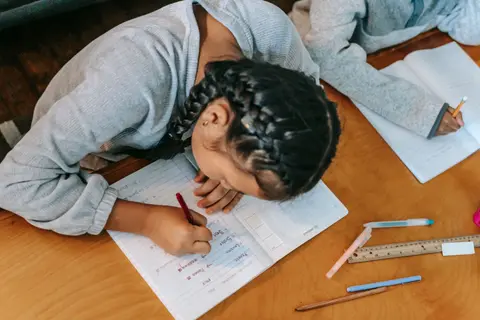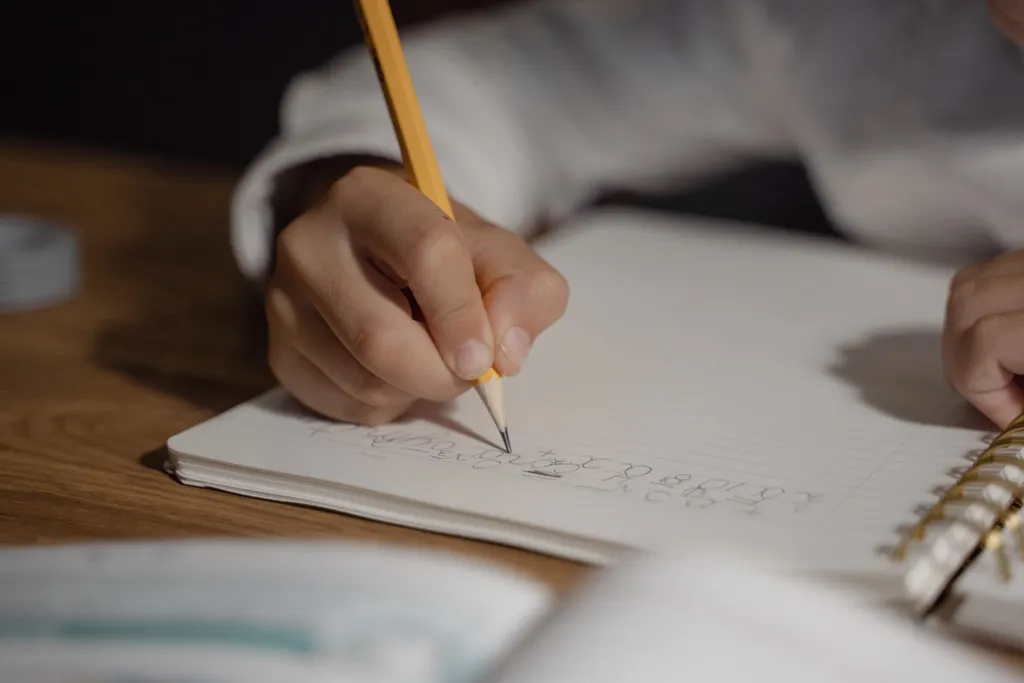
You write the answer. You know it's right. And then the test comes back with points off — not because you were wrong, but because your teacher couldn't read what you wrote. If your notes look like a doctor's scribble and your planner is a mystery even to you, this one's for you.
Here's the honest version of these handwriting tips: you don't need pretty, you need readable. The goal is simple — write so the person grading your work, and future-you skimming your notes, can read every word the first time. That's it. Neater writing won't make you smarter, but it makes sure the smart stuff you already wrote actually gets counted.
What "better handwriting" actually means
It doesn't mean cursive. It doesn't mean fancy. It means legible — every letter clearly itself, words spaced apart, lines sitting where they should.
Most messy handwriting isn't a talent problem. It's a speed problem. You're rushing, your grip is tense, and your hand is racing ahead of your eyes. Fix the rush, and most of the mess fixes itself. Below are the moves that do the most work for the least effort. Don't try all of them at once — pick one, run it for a week, then add the next.
Handwriting tips that make your writing readable
1. Loosen your grip. Tight grip is the number-one cause of shaky, tired, ugly writing. If your fingers go white or your hand aches after a paragraph, you're strangling the pen. Hold it like you'd hold a fork — firm enough not to drop, loose enough to wiggle. Let your arm move, not just your fingers.
2. Slow down on purpose. This feels backwards, but legible-first beats fast-and-messy every time. Write one sentence about half your normal speed and watch what happens — the letters straighten out almost by themselves. Speed comes back later, automatically, once your hand learns the clean shapes. For now, neat first.
3. Sit your letters on the line. Lined paper is free help — use it. Every letter's body should rest on the baseline, not float above it or sink below. Tails (g, y, p) drop under; stems (b, d, h) reach the top line. When letters share one baseline, a whole page instantly looks organized, even if each letter is plain.
4. Keep letters the same size. The fastest way to look messy is mixing giant and tiny letters in the same word. Pick a height and hold it. A quick trick: make every lowercase letter about half the height of a capital, and keep that ratio steady down the page.
5. Space your words evenly. Cramming words together turns a sentence into one long blur. Leave one finger-width (or one lowercase "o") of space between words. Consistent gaps are what let a teacher's eye glide across the line instead of stopping to untangle it.
6. Fix your two worst letters. You don't have to redo your whole alphabet — usually one or two letters cause most of the confusion. The classic troublemakers: an open a that reads like a u or o, an r that collapses into an n, and a t with no clear cross. Find your two, decide on one clear shape for each, and write a line of them. Two fixed letters can clean up a whole page.
7. Warm up for two minutes. Cold hands write sloppy. Before homework, scribble a few rows of loops, up-and-down zigzags, and circles. It loosens your grip and wakes up the muscles, the same way you'd stretch before running. Two minutes, then start your real work.
|
Aim for readable, not beautiful. The grader can't give credit for an answer they can't read. |
Worked example: rewriting one messy line
Say you scrawled this in a hurry during class:
"the mitochondria is the powerhuse of the cel" — cramped, letters all different sizes, the words running together so "powerhouse" lost a letter you didn't notice.
Here's the fix-it pass, one move at a time:
- Slow down and rewrite at half speed.
- Sit it on the line so every word shares one baseline.
- Even spacing — one "o" of gap between each word, so nothing collides.
- Same size — every lowercase letter the same height.
- Check your worst letters — make the a in "mitochondria" clearly an a, not a u.
Now it reads "The mitochondria is the powerhouse of the cell" — clean, spaced, and you actually caught the missing letters because you slowed down enough to see them. Notice the point: you didn't write more, you wrote the same words so they're readable. (And to be clear — this is practice on a throwaway sentence, not your real homework. Always do your own assignments yourself.)
How to know it's working
Don't grade your own handwriting in the moment — you already know what it's supposed to say, so your brain fills in the gaps. Instead, put your notes away for a day, then read them cold. Can you read every word on the first try, with no guessing? That's the real test. Bonus check: hand a page to a friend or a parent and ask them to read one paragraph out loud. Wherever they stumble is exactly where your next fix goes.
Try it tonight
Pick one move from the list — loosen your grip is the easiest place to start — and use only that during tonight's homework. One move, one night. Tomorrow, add the next. Small and steady beats a one-time overhaul you'll never repeat.
Want this to become a habit, not a one-off? hello.study turns it into a few-minute daily habit — start free →
Common questions
Why is my handwriting so messy?
Usually one of three things: you're writing too fast, gripping the pen too tight, or your letters keep changing size. Speed is the most common culprit. Slow down to about half pace, loosen your grip, and keep every letter the same height — most messiness clears up once those three are fixed.
How long does it take to improve handwriting?
There's no fixed number, and you'll see different claims online. What's reliable is that short, daily practice beats one long session. A few minutes most days for a few weeks usually shows clear gains. Pick one thing to fix at a time so progress is easy to notice and stick with.
Does handwriting affect your grades?
It can, but indirectly. A teacher can only give credit for an answer they can read, so an illegible right answer risks lost points on tests and written work. Neat writing doesn't make your ideas better — it makes sure the good ideas you already have get counted.
How can I write neater and faster?
Aim for legible-first now; speed comes back on its own as your hand learns clean shapes. In a fast lecture, use short forms and your own shorthand, then rewrite key parts neatly later. If keeping up the pace is a real struggle, that's also when typed notes can be a smart, allowed option.
What if my handwriting is hard no matter how much I practice?
For some people, handwriting is genuinely tough — sometimes from a motor difficulty like dysgraphia — and no amount of "try harder" fully fixes it. That's okay, and it's not a character flaw. Typing your notes or assignments, or talking to your teacher about options, is a completely reasonable path.