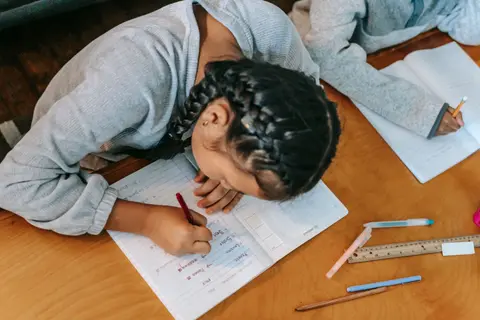
You sat at your desk for two hours last night. You read the chapter. You highlighted the important parts in yellow. You read it again. And this morning, staring at the quiz, your mind goes blank — like you never opened the book at all. That's not a you problem. That's a method problem.
The fix is active recall: instead of rereading your notes, you close them and try to pull the answer out of your own head from memory. That one switch — from looking at the material to retrieving it — is the single biggest upgrade most students can make, and it works because the act of remembering is what actually builds the memory.
What active recall actually means
Rereading feels like studying. Your eyes move, the words look familiar, and that familiarity tricks you into thinking I know this. But recognizing something on the page is not the same as being able to produce it when the page is gone — and a test always takes the page away.
Active recall flips the work. You ask yourself a question, then dig for the answer before you check. Every time you make your brain reach for something, that memory gets stronger and easier to find next time. It's the difference between watching someone shoot a free throw and shooting it yourself.
The whole point of studying is figuring out what to remember and then proving to yourself you actually do. Active recall is the proving part — and it only takes a few minutes a day.
Why does rereading feel like it's working when it isn't?
Because your brain rewards familiarity, not knowledge. The second and third time you read a paragraph, it slides by faster and feels obvious, so you walk away thinking you've got it. But "this looks familiar" and "I can produce this with the book shut" are two completely different skills, and only the second one shows up on test day. The smoother rereading feels, the more it's fooling you. That false confidence is the trap — and it's exactly why a lot of hard-working students still get blindsided by grades that don't match the hours they put in.
What's actually happening in your brain when you recall something?
You don't have to know the neuroscience to use this, but the short version helps. Every time you pull a fact out of memory instead of looking it up, you strengthen the path back to it — like walking the same trail until it turns into a clear, easy route. Looking the answer up keeps the trail faint. Reaching for it, struggling a little, and then getting there is what wears the path in. So the moment that feels the worst — ugh, I can't remember — is the exact moment the learning is happening, as long as you finish the reach.
The method: study by testing yourself
You don't need fancy tools. You need a way to ask yourself questions and a moment of honesty about whether you really knew the answer. Here are the moves.
Turn your notes into questions. After you read a section, don't reread it — flip it. A heading like "Causes of the Civil War" becomes "What were the causes of the Civil War?" A definition becomes "What does photosynthesis mean?" You're building a tiny quiz out of the exact stuff you just learned.
Close the book and answer first. This is the part that feels uncomfortable, and that discomfort is the work paying off. Cover your notes, say or write the answer from memory, then check. If you peek before you try, you've turned active recall back into rereading.
Be honest about "almost." If you got the gist but missed a key word or a step, that counts as a miss. Mark it. The questions you fumble are gold — they're telling you exactly where your memory is thin, so you stop wasting time on what you already know.
Space it out. Don't drill the same card ten times in one sitting. Test yourself today, then again in a day or two. Letting a little forgetting happen and then pulling the answer back is harder — and harder is what makes it stick.
Mix in older material. Every few sessions, throw in a question from last week's lesson. Real tests don't warn you when the topic changes, so practice switching between topics instead of studying one neat block at a time.
Turn misses into your study list. At the end of a session, you should have a short list of the questions you fumbled. That list is your homework for next time — not the whole chapter again. Most of the chapter you already know; rereading all of it just to reach the three weak spots is the slow way. Active recall hands you a map of exactly where to spend your minutes.
How long should this take?
Less time than rereading, honestly. Ten focused minutes of self-quizzing usually beats an hour of passive review, because every minute is real retrieval instead of comfortable skimming. Short and frequent wins: a few minutes after class, a few more the next day, a quick run-through before the test.
What if I can't remember anything at all?
That's information, not failure. If you blank on a question, glance at the answer, close the book, and immediately try to say it back in your own words. Then come back to that same question later in the session. The goal isn't to feel smart right now — it's to make the answer easier to find next time.
Five ways to do it, in five subjects
Active recall looks a little different depending on what you're studying. Here's how to run it across the kinds of work you actually get. (These are practice models — use the method on your own assignments; don't copy these exact items.)
1. Science vocabulary. Say your chapter introduces mitochondria, ribosome, and cytoplasm. Write each term on one side of an index card and leave the back blank. Shuffle the stack, look at a term, and say the definition out loud before you flip the card. Got "mitochondria" but said "makes food" instead of "produces energy for the cell"? Mark it as a miss and circle back. You're not reading the glossary — you're pulling it from memory.
2. A history timeline. Suppose you need the order of three events leading to a war. Cover your notes and try to list them in order from memory, with the year for each. Can't get the middle one? That gap is your study target. Check, close the notes, and rebuild the whole sequence again from the top. When you can lay out the timeline twice in a row with no peeking, that part is solid.
3. A math concept. Active recall in math isn't memorizing one answer — it's recalling the steps. Take a worked example your teacher already solved, cover the solution, and try to reproduce the steps on your own paper. Then uncover it and compare. Did you forget to flip the inequality sign, or skip distributing? That's the exact move to practice — not the specific numbers, the method.
4. An English reading passage. After reading a short story for class, close the book and write three sentences from memory: what happened, who changed, and one quote or detail that mattered. Then reopen and check what you missed. Summarizing from memory forces you to retrieve the story instead of just recognizing it when you skim back over it.
5. A geography or social studies map. Say you need to know which states or countries border a region. Look at the labeled map once, then cover the labels and try to name each one from its shape and spot — out loud or by writing them in. Uncover and check. The ones you blank on are the ones to redraw from memory until they stick. You're testing recall, not tracing.
Which method should I use for my subject?
Match the form to what the test will ask you to do. If you'll need to define or name things, use cards or a covered list. If you'll need to explain or summarize, write it from memory in your own words. If you'll need to solve, redo a solved example with the answer hidden. The form changes, but every version follows the same rule: cover the source, produce the answer, then check.
Rereading vs. active recall
Both feel like studying. Only one is mostly building memory. Here's the honest split.
| Rereading and highlighting | Active recall |
|---|---|
| Feels easy and familiar | Feels harder, a little uncomfortable |
| Your eyes do the work | Your memory does the work |
| You recognize the answer on the page | You produce the answer with the page closed |
| Hard to tell what you don't know yet | Instantly shows your weak spots |
| Tricks you into false confidence | Tells you the truth before the test does |
Researchers who reviewed dozens of study techniques found that practice testing — quizzing yourself — was one of the most effective strategies for students of all ages, while rereading and highlighting offered much less. The uncomfortable method is the one that works.
Check yourself: close the book, answer out loud
Here's the test for whether your studying is actually working. Close the book and say the answer out loud, in full sentences, as if you're explaining it to a friend. No glancing, no "yeah I basically know it." If you can teach it from a blank page, it's in there. If you stumble or trail off, you've just found exactly what to study next — which is a win, not a setback.
|
If you can only recognize it, you don't know it yet. If you can recall it with the book closed, you do. |
What's the most common mistake students make with active recall?
Peeking too soon. The second the answer feels hard to grab, it's tempting to glance at the notes "just to check" — but that glance turns the whole thing back into rereading and skips the part that builds memory. Give yourself a real beat to reach for it first, even if you end up missing. The miss is useful; the peek is not. The other common slip is only testing the stuff you already know because it feels good to get them right. Spend your minutes on the questions you fumble, not the ones you've nailed.
Try it tonight
Pick the smallest thing — one section of one subject. Read it once. Then close the notes and write three questions from it. Answer them from memory. Check. Mark what you missed and try those again tomorrow. That's the whole loop, and it takes a few minutes.
Want this to become a habit, not a one-off? hello.study turns it into a few-minute daily habit — start free →
Common questions
Is active recall the same as flashcards?
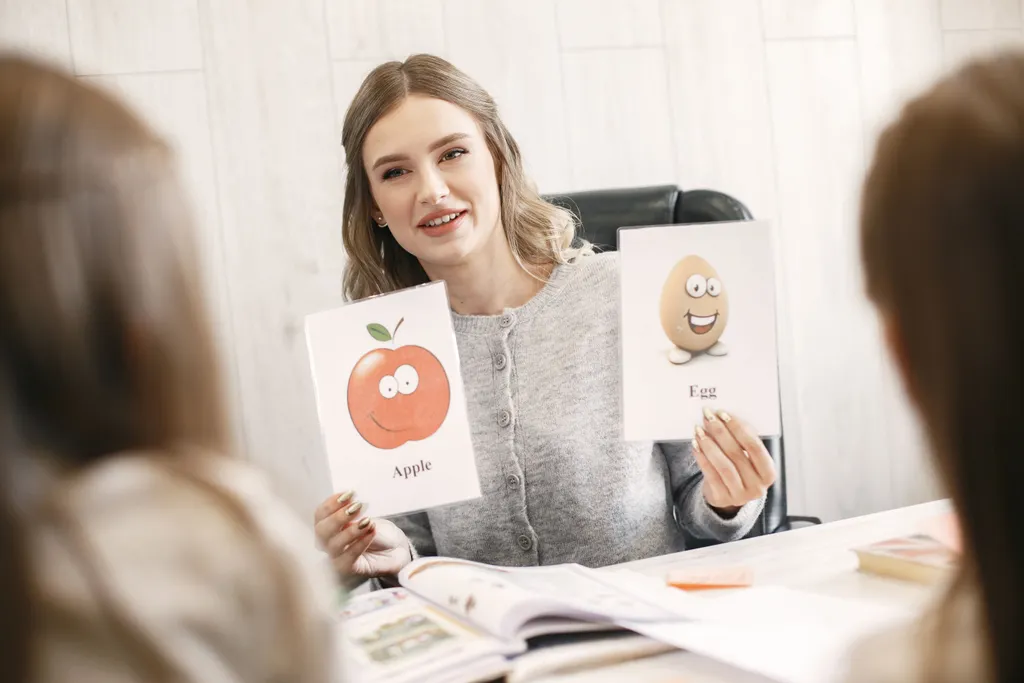
Flashcards are one tool for active recall, not the whole thing. What makes a flashcard work is that you answer from memory before you flip it. If you just read both sides, it's rereading in disguise. You can do active recall with cards, a folded sheet of paper, or a friend quizzing you.
How is active recall different from spaced repetition?
Active recall is how you study — retrieving answers from memory instead of rereading. Spaced repetition is when you study — spreading your sessions out over days instead of cramming. They work best together: recall the material, then come back and recall it again a day or two later.
Why does active recall feel so much harder than rereading?
Because it is harder — and that's the point. Rereading feels smooth because you're recognizing familiar words, not building new memory. Active recall makes your brain reach, and that effort is exactly what strengthens the memory. Easy studying usually means little is sticking.
Can I use active recall for math, not just facts?
Yes. In math you recall steps and methods, not single answers. Cover a solved example and try to reproduce the steps yourself, then check where you slipped. You're practicing the process — how to set it up and what move comes next — which is what a math test actually asks for.
How soon should I review again after the first time?
Don't drill it ten times in one sitting. Quiz yourself once when you first learn it, then again a day or two later, then again before the test. Letting a little forgetting happen between sessions and then pulling the answer back is what makes the memory durable.
What if I keep getting the same question wrong?
That question is doing its job — it found a real gap. Look at the answer, close your notes, and say it back in your own words right away. Then test that exact question again later in the session and again the next day. The ones you miss most are the ones worth the most attention.
Does active recall work for every subject?
It works anywhere you need to remember or do something on your own: vocabulary, history, science, formulas, even essay arguments. The form changes — cards, summaries from memory, redoing steps — but the core move is the same: close the source and produce the answer before you check.
Sources
- Roediger, H. L., III, & Karpicke, J. D. (2006). Test-Enhanced Learning: Taking Memory Tests Improves Long-Term Retention. Psychological Science, 17(3), 249–255.
- Dunlosky, J., Rawson, K. A., Marsh, E. J., Nathan, M. J., & Willingham, D. T. (2013). Improving Students' Learning With Effective Learning Techniques: Promising Directions From Cognitive and Educational Psychology. Psychological Science in the Public Interest, 14(1), 4–58.