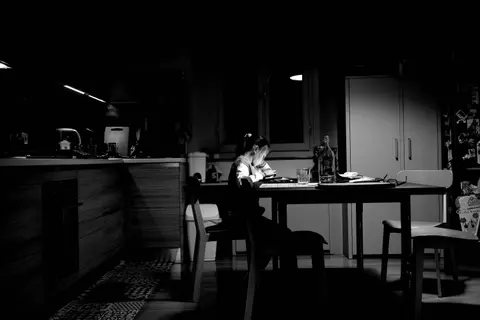
You've asked three times. The backpack is still zipped, the worksheet is still blank, and the conversation is sliding toward a fight you both hate. When your child has ADHD, schoolwork can feel like a nightly standoff — and the nagging that's supposed to fix it usually makes the wall higher.
The most useful ADHD student study help isn't a louder reminder; it's a smaller, more predictable routine you set up with your child, so starting and finishing schoolwork takes less willpower every night. You're not trying to make them try harder. You're trying to make the work easier to begin. (Diagnosis, medication, and treatment questions belong with your child's doctor or clinician — this guide is only about study habits and focus support at home.)
What "supporting an ADHD student" actually means
When working memory or getting started is hard, a child can fully intend to do their homework and still not move. That's not defiance, and it's not laziness. The task feels foggy and huge, so their brain stalls at the edge of it.
Nagging targets the wrong thing. It adds pressure to a child who's already stuck, and over time the constant correction wears down how they feel about themselves and about you. Real support means shrinking the task and steadying the routine — so the next step is obvious and small enough to take.
That's the whole shift: from reminding them to do it, to making it easy to start.
The method: build a routine that starts itself
Pick two or three of these moves and run them the same way every night. Consistency is doing more of the work here than intensity.
-
Anchor homework to the same time and place. Decide together: right after a snack, at the kitchen table, every weekday. A fixed time and spot means their brain doesn't have to decide to start — the routine decides. You stop being the alarm clock. The less you announce it, the better; let the clock and the chair do the nagging.
-
Shrink the first step until it's almost silly. Don't say "do your math." Say "open the book to page 12 and write your name." A tiny, concrete first action gets a stalled brain moving, and motion is the hardest part. Once they're in the chair with a pencil down, the rest is far easier than it looked from across the room.
-
Clear the runway before they sit down. Phone in another room, TV off, table cleared except for what tonight's work needs. A child who's easily pulled off-task can't out-discipline a buzzing phone, so don't make them try. Set up the space once, the same way each night, so a clean desk becomes part of the routine instead of a fresh argument.
-
Break the assignment into visible chunks. Together, split the work into three or four small steps and write them on a sticky note: "1) vocab, 2) page 12, 3) read one paragraph." Crossing off each line gives a finished feeling along the way, instead of one giant unfinished thing looming until bedtime.
-
Use short work-and-break cycles. Try ten or fifteen minutes of work, then a real two-minute break — water, stretch, pet the dog — then back. Long unbroken stretches are where focus leaks out. Short, predictable cycles fit how a restless brain actually works, and the break gives them something to aim for.
-
Trade nagging for one calm check-in. Instead of hovering, agree on a single moment: "I'll come back when you've done step one." Then notice the small win out loud — "you started on your own, nice" — and leave. Catching what went right does more than catching what went wrong, and it protects the relationship the nagging cycle keeps spending down.
A worked example: the Tuesday math meltdown
Say it's Tuesday, and there are twenty math problems due tomorrow. The old pattern: you remind, they drift, you remind louder, it's 8:30 and nothing's done.
Run the method instead. Anchor: snack's over at 4:00, so 4:15 at the table, like every weekday. Shrink the first step: the goal isn't "twenty problems," it's "open to the page and do number one." Clear the runway: phone goes on the counter before they sit. Chunk it: sticky note reads "1) problems 1–7, 2) break, 3) 8–14, 4) break, 5) 15–20." Cycle: twelve minutes on, two minutes up. Check-in: you come back after chunk one, see seven problems done, and say "you got yourself started — that's the hard part." You didn't solve a single problem. You made it possible for them to.
How you know it's working
Don't measure success by perfect grades or a happy child every night — measure it by the routine needing less of you. You're on track when starting takes fewer reminders than it did last week, when the first step happens without a standoff, and when a rough night is a rough night instead of a blowup.
A good self-check: at the end of the week, ask yourself how many times you had to nag to get them started. If that number is shrinking, the routine is doing its job — even if the homework itself is still hard.
|
You're not trying to make your child focus harder. You're building a routine that needs less focus to begin. |
Try it this week
Tonight, do just one thing: pick the time and the spot for tomorrow's homework, and decide the silly-small first step together. That's it. Don't roll out all six moves at once — one steady anchor beats six shaky ones.
Want your child to practice this every day — without the nagging? hello.study turns it into a few-minute daily habit — start free →
Common questions
How do I help my ADHD child focus on homework without nagging?
Replace reminders with structure. Set a fixed homework time and place, shrink the first step to something tiny, and clear away distractions before they sit. When the routine carries the start, you don't have to. Then check in once, calmly, and notice what went right instead of what went wrong.
Why does my child with ADHD avoid starting schoolwork?
For many kids, starting is the hardest part — the task feels big and foggy, so the brain stalls before the first move. It usually isn't laziness or defiance. Making the very first step small and concrete ("open to page 12") gives a stuck brain something easy enough to actually begin.
Is nagging really that harmful?
Nagging rarely gets work done, and constant negative feedback can wear down a child's confidence and strain your relationship over time. A calmer, more predictable routine does the reminding for you. Swapping repeated correction for one steady check-in protects both the homework and the bond behind it.
Should I be doing this instead of getting help from a professional?
No — do both, and keep them separate. Study routines at home support your child day to day, but they aren't a substitute for care. Any questions about diagnosis, medication, or treatment belong with your child's doctor or a qualified clinician, who can guide the bigger picture.
Sources
- CDC — Treatment of ADHD (behavior management tips: keep daily routines, break complicated tasks into shorter steps, limit distractions during homework)
- CHADD — For Parents (constant negative feedback can erode a child's self-esteem; notice and praise small successes; work with a professional for assessment and treatment)